
Original nine-level watercolour guide
This visual guide helps you notice ribs, waist and belly tuck. A real body-condition score is confirmed hands-on by a veterinarian.
Three things to notice
Use touch and two viewpoints
Coat and breed shape can change what the eye sees, so start gently and let your veterinarian confirm what you feel.
Feel the ribs
Run flat fingers along the ribcage. In the healthy zone they are easy to count by touch under a thin cover — without pressing hard, and without seeing each one from afar.
Look from above
Stand over your dog. Behind the ribs the body should narrow into a visible waist before the hips.
Look from the side
At eye level, the belly line should rise from the chest toward the back legs rather than hang level or sag.
Under ideal
These dogs need veterinary attention to find out why weight is low and to plan a safe path back.
These visual signs are for learning only. Ask your veterinarian to confirm the score hands-on.
Body condition
Emaciated
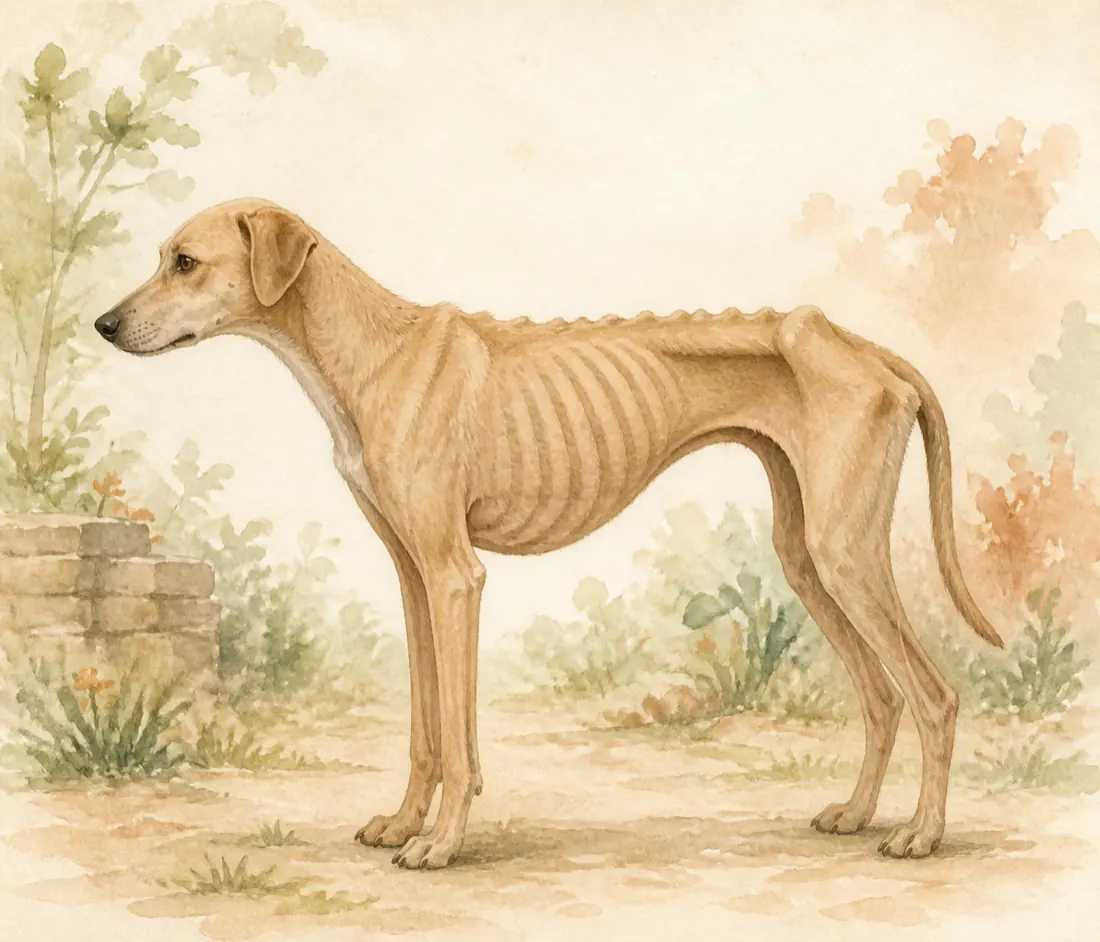
Ribs, spine and hip bones stand out sharply even from across a room. No fat can be felt anywhere on the body, and muscle is clearly wasting away.
Body condition
Very thin
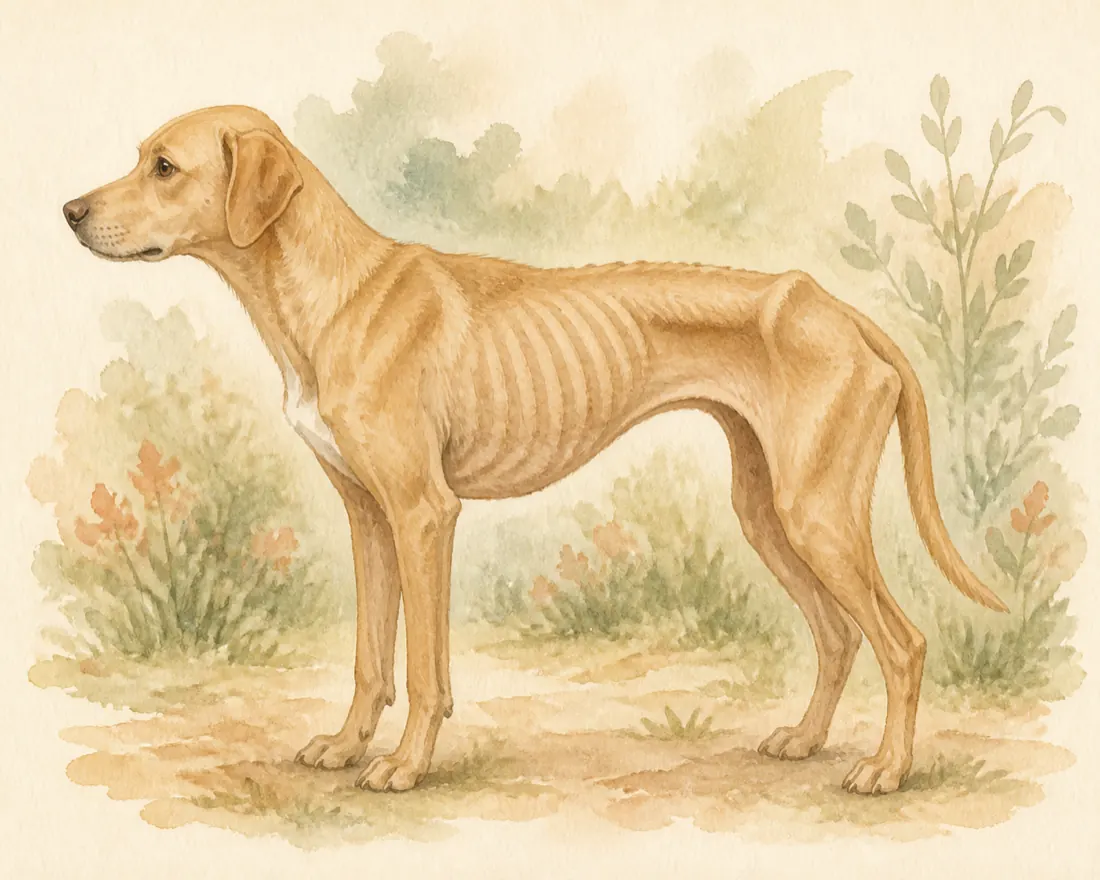
Ribs, spine and hip bones are still easy to see, with no fat layer under the skin and the first signs of muscle loss.
Body condition
Thin

Ribs are easy to feel and may just show through the coat. The tops of the spine peek through, hip bones start to stand out, and the waist and belly tuck are strongly marked.
Ideal
Ribs easy to feel, a visible waist, a tucked-up belly — this is the healthy zone the science links to longer, more comfortable lives.
These visual signs are for learning only. Ask your veterinarian to confirm the score hands-on.
Body condition
Lean ideal

Ribs are easy to feel under a thin covering. Seen from above the waist is obvious, and from the side the belly rises clearly toward the hips.
Body condition
Ideal

Ribs sit under a thin, even covering and are easy to count by touch. The body narrows behind the ribcage into a clear waist, and the belly line rises gently toward the hind legs.
Over ideal
Extra padding creeps up quietly. The earlier it is noticed, the gentler the fix — your vet will guide it safely.
These visual signs are for learning only. Ask your veterinarian to confirm the score hands-on.
Body condition
Slightly over

A soft layer of padding now covers the ribs. The waist is still there but has lost its edge, and the belly line runs closer to level than tucked.
Body condition
Heavy
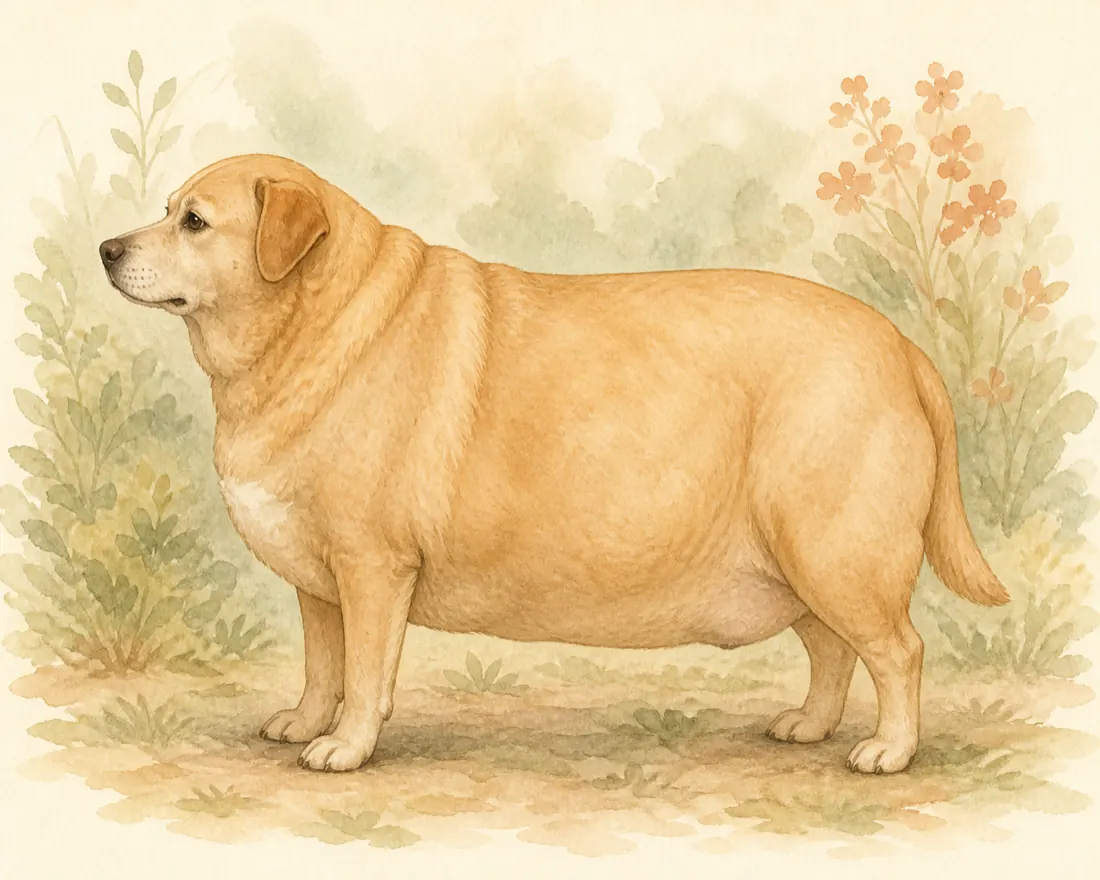
Ribs are hard to feel under a thick layer of fat. Fat gathers over the lower back and the base of the tail, and the waist is nearly gone.
Body condition
Obese
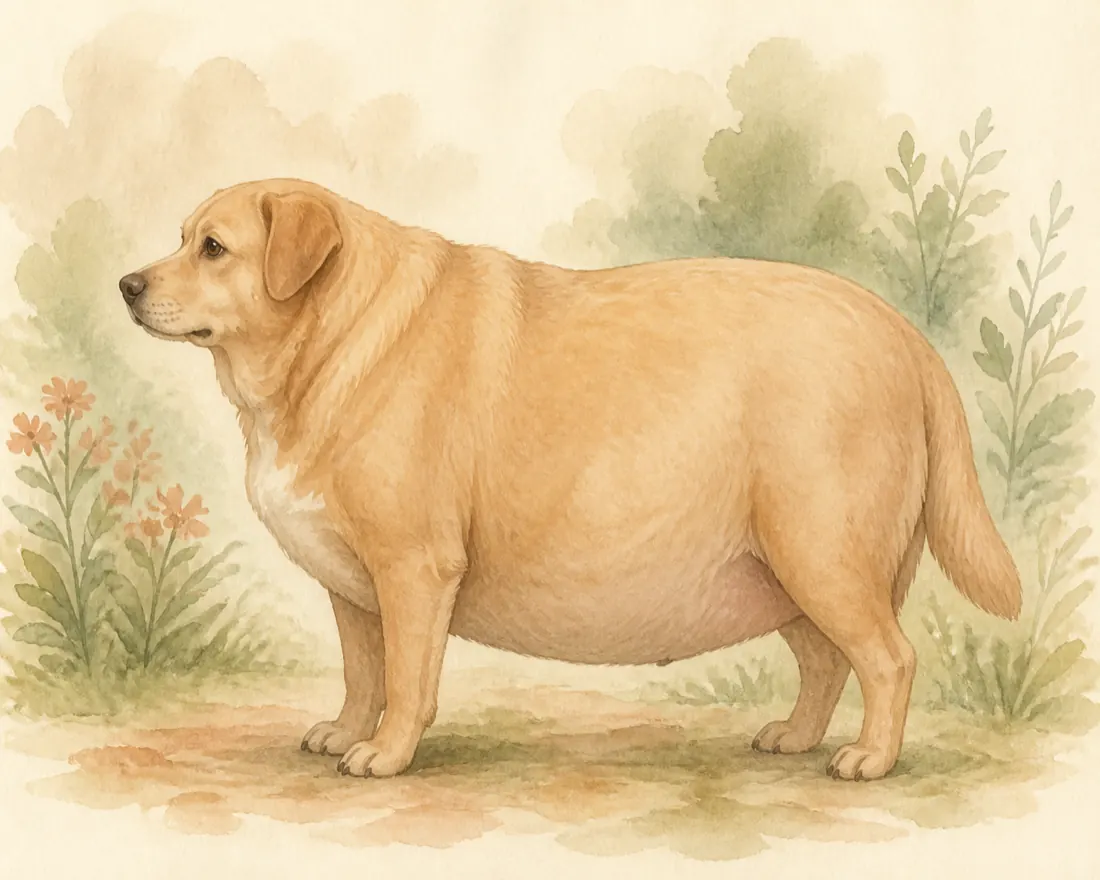
Ribs cannot be felt without firm pressure. Heavy fat sits over the back and tail base, the waist is gone, and the belly may bulge.
Body condition
Severely obese
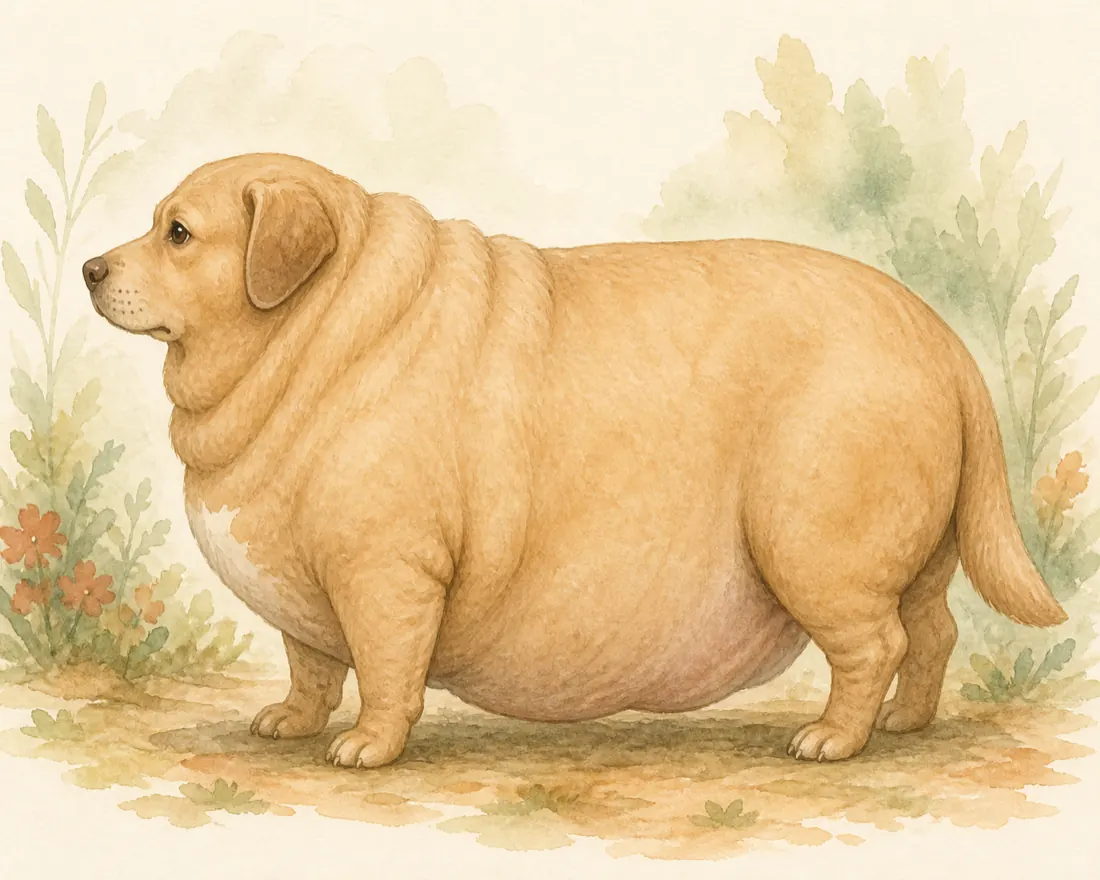
Large fat pads cover the chest, spine, tail base, neck and legs. There is no waist and no tuck, and the belly is clearly distended.
Hands-on confirmation
Let your veterinarian confirm it
Not sure where your dog sits? That is exactly what a vet visit is for — scoring is a hands-on skill, and your veterinarian will teach you what you are feeling for.
FluffyWA context
How this relates to a stay
During longer stays we monitor health daily — including how each dog is eating and moving. If something changes, we contact you and arrange veterinary care under the authority recorded at intake.
Attribution & reference
The system behind this guide
Laflamme · 1997
Validated nine-point system
9-point Body Condition Score system for dogs, developed and validated by D.P. Laflamme (Canine Practice, 1997)
Kealy · 2002
Lifespan evidence
Kealy RD et al., Effects of diet restriction on life span and age-related changes in dogs, JAVMA 2002;220:1315–1320 — the study behind the link between the ideal range and a longer, more comfortable life.
WSAVA · Official chart
WSAVA Global Nutrition Committee Body Condition Score chart (dog)
Chart ©2013, all rights reserved — content on this page is an original paraphrase and original artwork, cited with attribution; the official chart is linked for reference.
Questions about a stay
Message FluffyWA
For questions about boarding or daycare arrangements, choose the message channel that suits you.